The toy company behind Star Wars figures and the Easy-Bake Oven also gave the world Blythe. Here is how it happened.
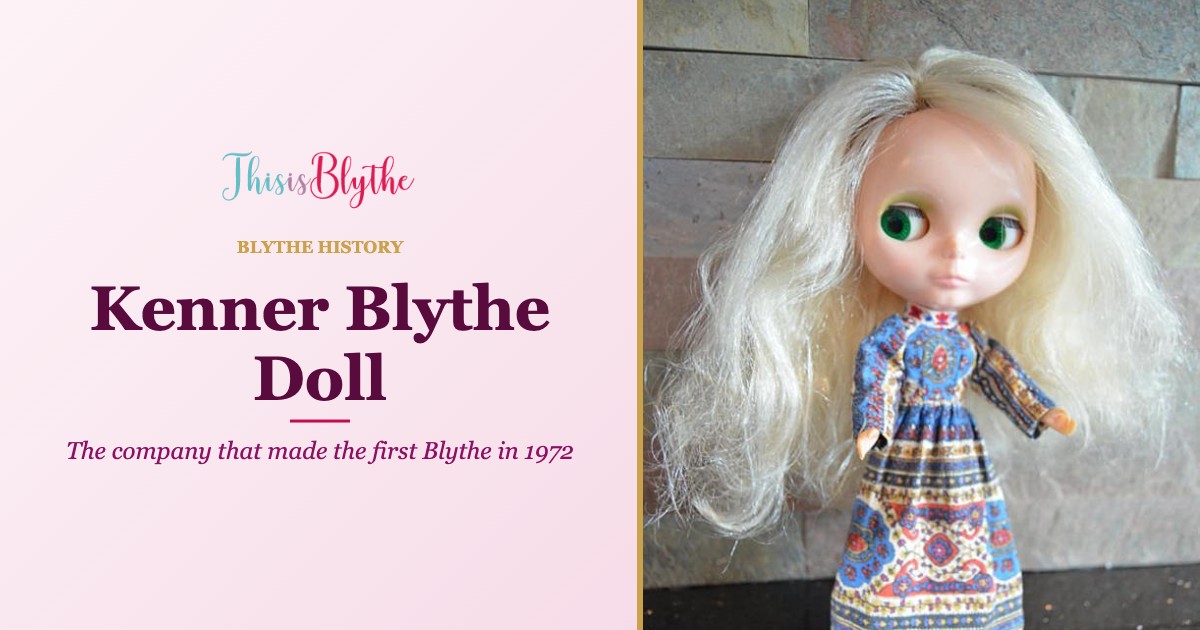
Every Blythe on every shelf today traces back to one doll: the Kenner Blythe doll of 1972. She was sold by a toy company better known for science kits, ovens and, later, Star Wars figures. This is the story of that company, how it made Blythe, and what happened next.
If you want to buy or identify an original, our vintage Blythe doll guide has the practical checklist. This page is about Kenner itself.
Kenner Products was founded in Cincinnati, Ohio, in 1946 by the brothers Albert, Philip and Joseph Steiner. One of its original 1972 Blythe dolls is now in the Victoria and Albert Museum collection. Over the following decades it became one of the best-known toy makers in America.
| Year | Kenner milestone |
|---|---|
| 1946 | Kenner is founded in Cincinnati |
| 1963 | The Easy-Bake Oven is introduced |
| 1966 | Spirograph is introduced |
| 1967 | General Mills buys Kenner |
| 1972 | Blythe is released |
| 1976 to 1985 | Kenner holds the Star Wars toy rights |
| 1987 | Kenner Parker is acquired by Tonka |
| 1991 | Hasbro buys Tonka |
| 2000 | Hasbro closes the Cincinnati offices |
Blythe was not designed inside Kenner. She was created by toy designer Allison Katzman at the Chicago firm Marvin Glass and Associates, and Kenner released her in 1972. You can read about her designer in who created Blythe.
The dolls were manufactured in Hong Kong. The Victoria and Albert Museum lists its 1972 Kenner Blythe as “Hong Kong (manufactured)”. According to Doll Reference, the head is marked “BLYTHE”, “KENNER PRODUCTS” and “Cincinnati, Ohio”, and the back is marked “© 1972 GMFGI”, “Patents Pending” and “Made in Hong Kong”. GMFGI stands for General Mills Fun Group Inc., because General Mills owned Kenner at the time.

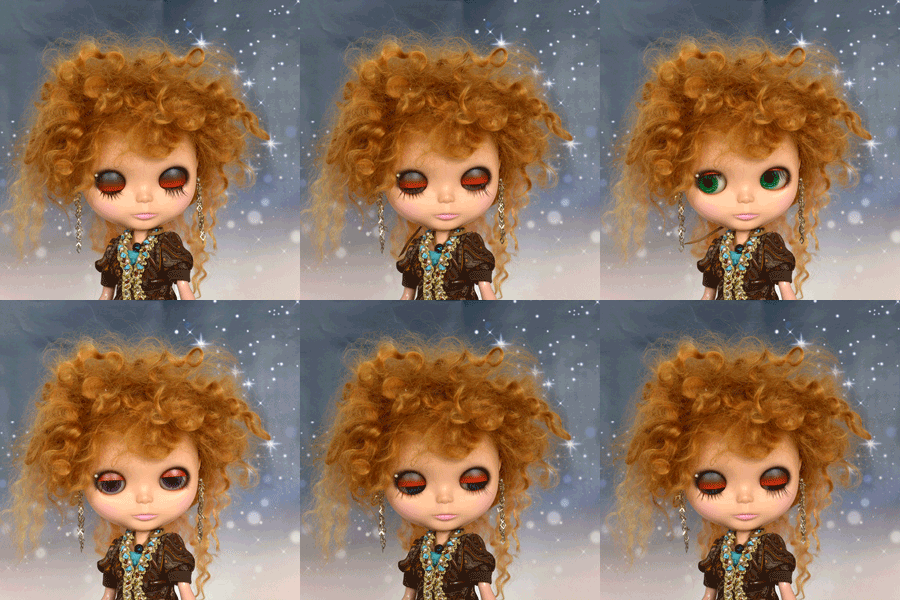
Her headline feature was the pull string at the back of her head. Pull it and her eyes changed colour and direction, which no other doll on the shelf could do. Read about the story behind that look in Blythe’s big eyes.
Kenner’s Blythe lasted only about a year. Children found her huge head and enormous eyes a little unsettling, and sales were disappointing. For almost three decades she was a forgotten toy, found mostly in attics and at flea markets.
When Kenner became part of Hasbro, so did Blythe. Hasbro still owns the Blythe brand today. In 2001, the Tokyo company CWC relaunched her in Japan as Neo Blythe, with Hasbro’s approval and Takara’s manufacturing expertise. The full story is in our Blythe doll timeline.
So the doll that failed for Kenner became one of the most collected dolls in the world, more than 50 years after the first Kenner Blythe doll left the factory.
Original Kenner dolls are rare and delicate. If you love their retro charm, you can design a modern doll with long soft hair, a matte face and a vintage-style outfit in our build-your-own Blythe studio.
Go deeper with our Blythe history guide and where Blythe dolls are made.
With love, This Is Blythe Team
Say hello to Jenna Anderson — our Customer Happiness Director and resident Blythe doll devotee. Affectionately known around the studio as the “Blythe Whisperer,” Jenna spends her days helping collectors find the doll that feels unmistakably theirs, and her evenings writing the stories you read here. Her warmth, eye for detail, and genuine love of these big-eyed characters make her the heart of the This Is Blythe community.
When she steps away from the inbox, you'll find her sewing tiny doll-sized accessories, behind a camera, or lost in some new arts-and-crafts project — the same curiosity and care she pours into every doll. Read more about Jenna's journey into the world of Blythe here.
New posts, doll drops & members-only deals — straight to your inbox.
No spam, just dolls. Unsubscribe anytime.
Here's your code — tap copy, then use it at checkout.
Your welcome code
BFF26BYNWUse it on any new order — we've emailed it to you, too. Every order ships free worldwide with a 30-day guarantee. 💕
Free Worldwide Shipping | 30-Day Money-Back Guarantee
© 2026 This Is Blythe Official Website. All rights reserved.
The world’s top custom Blythe doll maker since 2000.
Cookie Policy | Accessibility Statement | Do Not Sell or Share My Personal Information | Ethics & Compliance | GDPR & CCPA Compliance | Data Processing Agreement | Trust Certificate | DMCA