The answer depends on which Blythe you mean. Here is the short, honest version for each one.
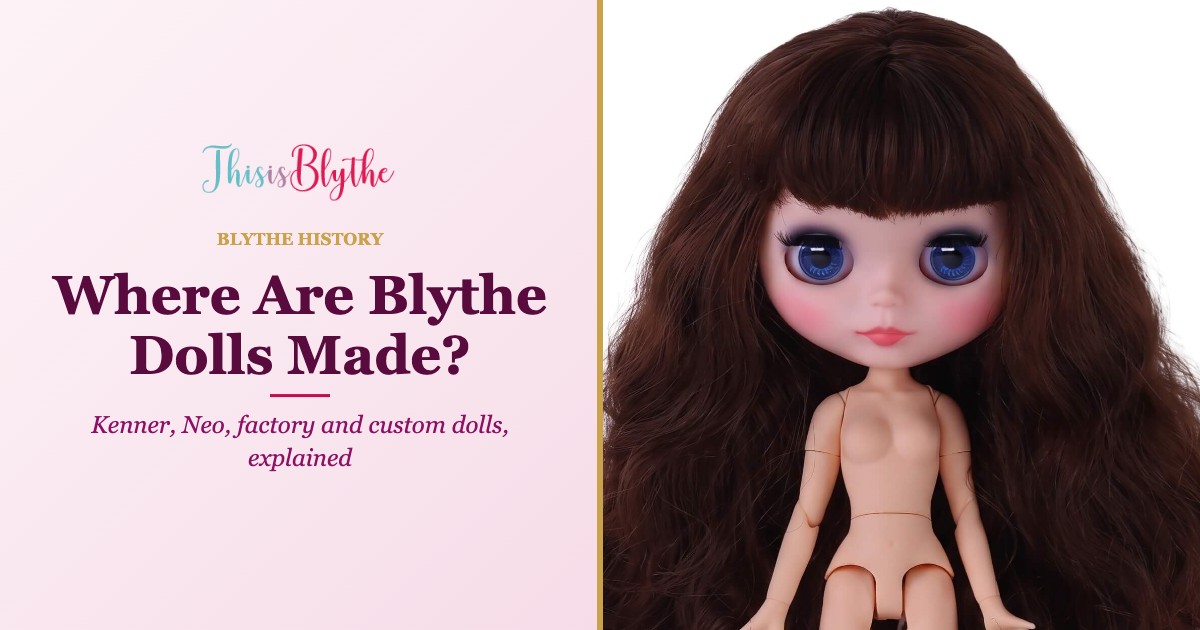
Where are Blythe dolls made? It is one of the first questions new collectors ask, and the honest answer is: it depends which Blythe you mean. The original 1972 doll, the official Neo Blythe and the factory and custom dolls you see online all come from different places.
Here is the quick version, then the story behind each one.
| Type of Blythe | Years | Where she is made | Who makes her |
|---|---|---|---|
| Original Kenner Blythe | 1972 | Manufactured in Hong Kong for the US market | Kenner Products |
| Official Neo, Middie and Petite Blythe | 2001 to today | Created in Japan | CWC, under licence from Hasbro |
| Factory Blythe-style dolls | 2000s to today | Made in China | Independent manufacturers |
| Custom Blythe dolls | Today | A factory or official doll, then customized by an artist | Independent artists and studios |
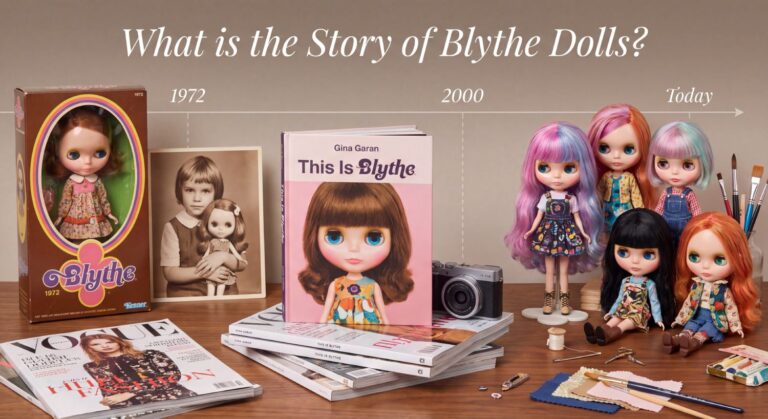
Blythe was designed in Chicago by toy designer Allison Katzman at Marvin Glass and Associates, and sold in the United States by Kenner in 1972. You can read more about her in our guide to who created Blythe.
The dolls themselves were manufactured in Hong Kong. The Victoria and Albert Museum’s record for its 1972 Kenner Blythe lists the place of origin as “Hong Kong (manufactured)”. Like many American toys of the era, she was designed in the US and produced overseas.

She lasted only about a year on shelves, which is why vintage Kenner dolls are so rare today. If you are curious about collecting one, our vintage Blythe guide explains what to look for.
Blythe’s second life began in Japan. Junko Wong, the CEO of the Tokyo company CWC, came across photographs of Blythe in 1999. A year later Blythe starred in a TV commercial for the Parco department store, and in June 2001 the first Neo Blythe was released, produced by CWC with Hasbro’s approval and Takara’s manufacturing expertise. Takara is now part of Takara Tomy.
So who makes Blythe dolls today? Hasbro owns the Blythe brand, and CWC manages the licence. The official collection is created in Japan, and it now includes three sizes:
Official dolls are made in limited editions, and each release has its own name, outfit and box. That is a big part of why they are so collectible.
If you have seen Blythe-style dolls with jointed bodies in dozens of hair colours at lower prices, you have met factory Blythe dolls. They are made by independent manufacturers in China. They share the Neo Blythe look, with the same big head and colour-changing eyes.
That does not make them bad dolls. They are the favourite base for customizers, because they are affordable, easy to take apart and come in many skin tones. The important thing is that they are sold honestly. Our explainer on what a factory Blythe doll is covers the differences in detail.
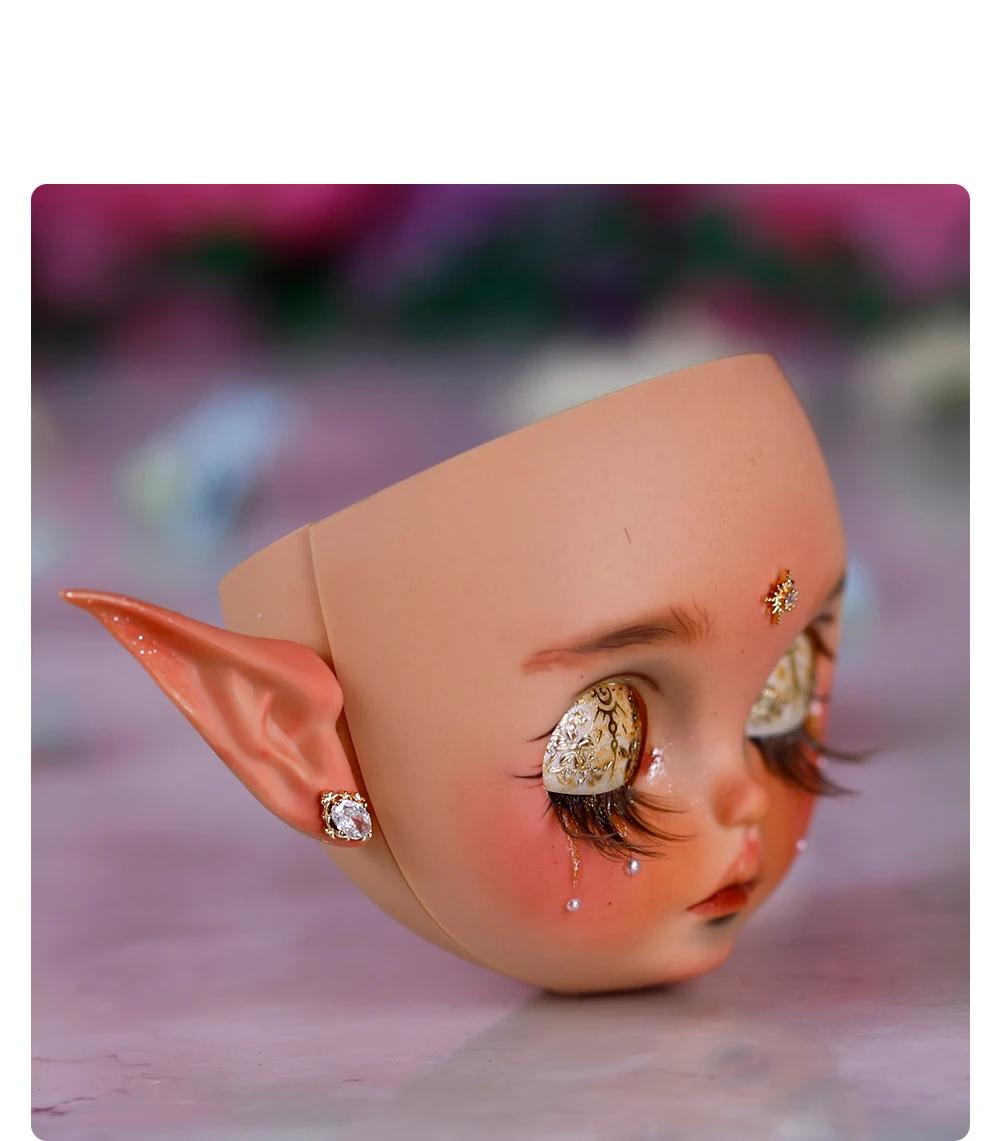
A custom Blythe is made twice. First the doll is manufactured, usually as a factory doll and sometimes as an official one. Then an artist takes her apart and makes her unique: carving the lips, sanding the face, painting the makeup, swapping the eye chips and restyling or rerooting the hair.
Our custom dolls at This Is Blythe are built with original Blythe parts and finished by hand, so no two are exactly alike. You can browse our one-of-a-kind custom Blythe dolls or design your own in our build-your-own Blythe studio.
A quick check
Kenner: a vintage doll from 1972 with the original pull-string eyes and a very simple body. Official Neo, Middie or Petite: sold in a named, branded box as a limited release. Factory: usually sold nude or in simple packaging, often with a jointed body and many hair colour options. Custom: a carved and painted face, often signed or described by the artist.
If you are buying, knowing where a Blythe doll was made helps you pay the right price and avoid sellers who blur the lines. Our honest Blythe buyer’s guide shows how to spot them.
Next time a friend asks “where are Blythe dolls made?”, you will have the full answer. Official Blythe is created in Japan, the vintage originals came from Hong Kong, factory dolls are made in China, and at This Is Blythe every custom doll is built with original Blythe parts and finished by hand. Each one has its own place on a collector’s shelf.
For the full timeline, read our Blythe history guide, or see how she compares with other collector dolls in Blythe vs Barbie, Labubu, Pullip and BJD.
With love, This Is Blythe Team
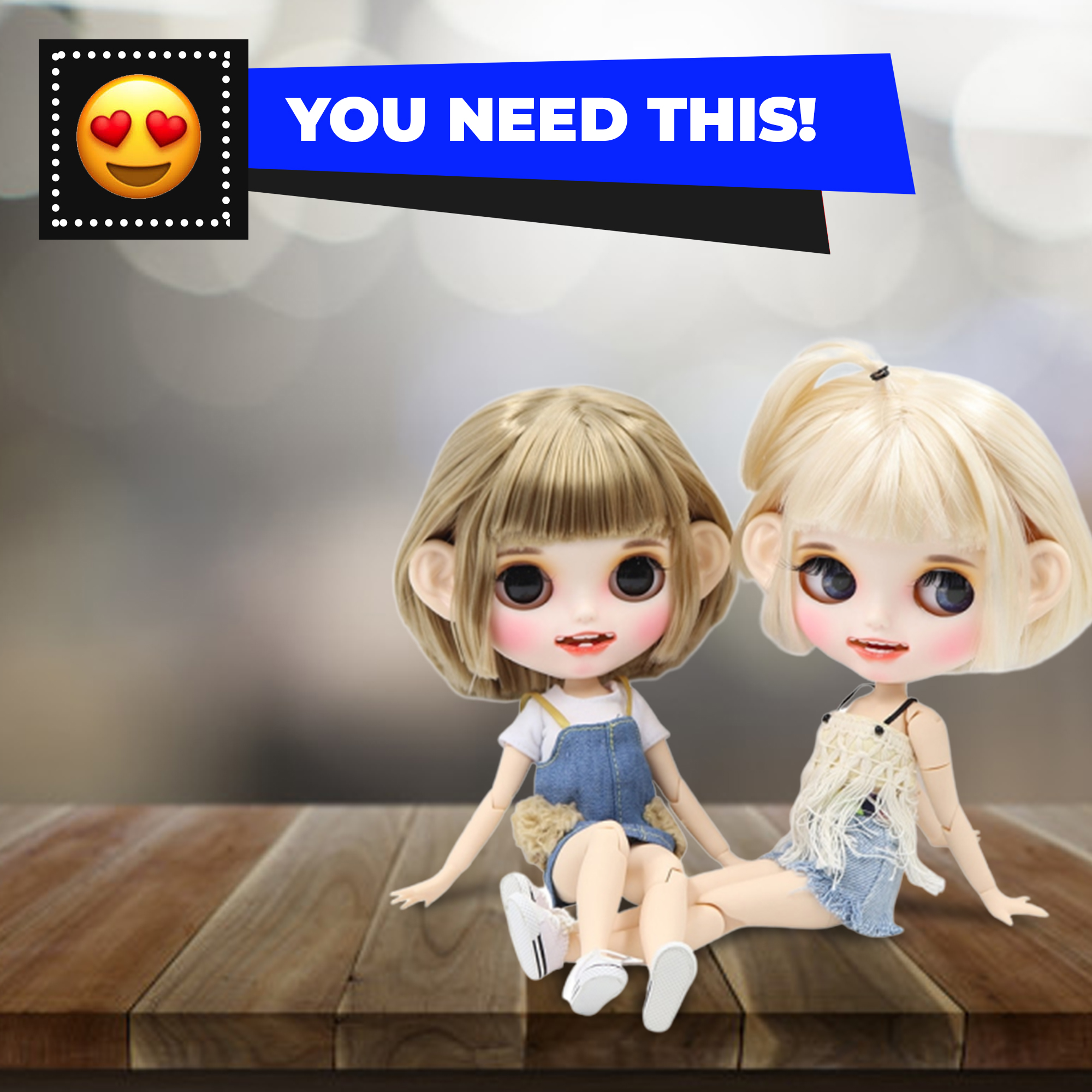
These dolls are really nice
Say hello to Jenna Anderson — our Customer Happiness Director and resident Blythe doll devotee. Affectionately known around the studio as the “Blythe Whisperer,” Jenna spends her days helping collectors find the doll that feels unmistakably theirs, and her evenings writing the stories you read here. Her warmth, eye for detail, and genuine love of these big-eyed characters make her the heart of the This Is Blythe community.
When she steps away from the inbox, you'll find her sewing tiny doll-sized accessories, behind a camera, or lost in some new arts-and-crafts project — the same curiosity and care she pours into every doll. Read more about Jenna's journey into the world of Blythe here.
New posts, doll drops & members-only deals — straight to your inbox.
No spam, just dolls. Unsubscribe anytime.
Here's your code — tap copy, then use it at checkout.
Your welcome code
BFF26BYNWUse it on any new order — we've emailed it to you, too. Every order ships free worldwide with a 30-day guarantee. 💕
Free Worldwide Shipping | 30-Day Money-Back Guarantee
© 2026 This Is Blythe Official Website. All rights reserved.
The world’s top custom Blythe doll maker since 2000.
Cookie Policy | Accessibility Statement | Do Not Sell or Share My Personal Information | Ethics & Compliance | GDPR & CCPA Compliance | Data Processing Agreement | Trust Certificate | DMCA